SMAS FACELIFT
One facelift is not like the other – there are various surgical procedures called facelift. Some surgeons do only one procedure and attempt to adjust it to the patient’s needs…other surgeons take advantage of a variety of facelifts to maximize the results.
SMAS Facelift differs from the traditional Facelift in that it lifts the deeper layer of the face. SMAS – or superficial musculo-aponeurotic system – is composed of multiple fibrous extensions that attach through the subcutaneous fat to the superficial epidermal-dermal layer of the skin, and these connections cause the three layers of the facial skin to “move together” as a unit. The SMAS attachment is particularly noticeable at the nasolabial folds. The SMAS membrane continues as a layer of smooth fibrous tissue that reaches to the cheekbone below the eye and attaches to the bone as it extends in front of the ear area. A gliding plane, between the SMAS and the underlying structures of the face, allows free movement of the skin unit to create facial expressions. These movements are produced by the superficial muscles of expression. As facial skin ages, there is gradual loss of elasticity in the epidermal layer of the skin as well as in the SMAS membrane. Gravity produces sagging of the cheek skin unit along the jaw bone – creating those fleshy jowls and often a double chin. This drooping of the fatty portion of the lax skin unit along the jaw area occurs while cheek fat sags forward to increase the prominence of the nasolabial fold. This then descends downward below the mouth to the chin – to become a jowl. The sagging of the SMAS membrane contributes as much to the aging face as does loss of elasticity in the superficial dermal layer. The classic or traditional facelift surgery addresses only the superficial dermal skin unit - and usually results in a “too tight” or pinched look.
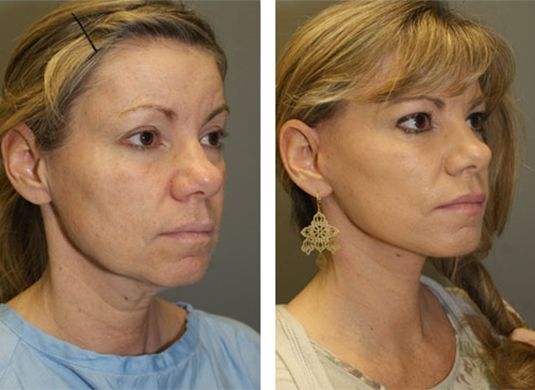
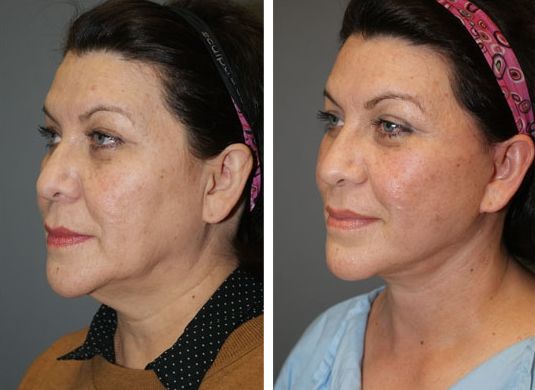
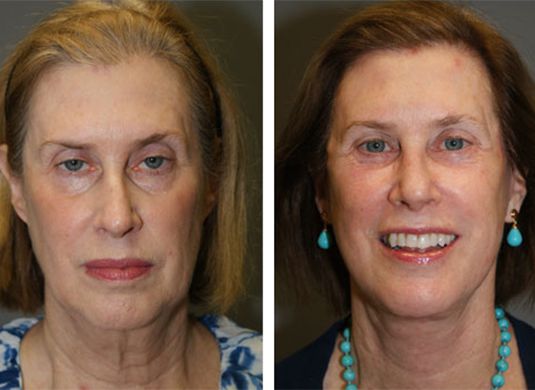
Dr. Davison performs the SMAS facelift using great skill and new techniques that add volume to the face to reverse facial aging – without a pulled or pinched look. The direction of pull is up not back reducing the windswept look.
BENEFITS OF SMAS FACELIFT SURGERY:
- SMAS Facelift can take many years off your face – with long lasting results
- SMAS Facelift corrects jowls, hollow cheeks, nasolabial folds – effectively
- SMAS Facelift has proven to keep you looking younger for 10 years or more
- SMAS Facelift deals with the deeper layers of skin structure for better results
- SMAS Facelift results in a more youthful – more natural looking appearance
- SMAS Facelift requires superior surgical skill – which Dr. Davison has
If you are in your 50’s or more mature and have a realistic desire to turn back the clock – you are probably a good candidate for Dr Davison’s special SMAS Facelift surgery. You must be in otherwise good health, have reasonable and realistic goals and expectations and be able to clearly communicate your concerns to Dr. Davison during your initial personal consultation.
The initial consultation with your surgeon is critical! It should always be face to face with your surgeon during which time he/she listens closely to your concerns. Dr. Davison believes this time spent with you is critical to both you and to him. It is during the consultation that he comes to fully understand your concerns, evaluates them correctly and is then able to make the recommendations and develop the surgery/treatment plan that is right for you. Dr. Davison invests the time – to sit down and talk to you face-to-face.
After you are prepped and anesthetized (general anesthesia or IV sedation), Dr. Davison will mark your face to indicate incision(s) placement and then proceed to make those incisions. Working through these he will free the 3-layer unit of facial and neck skin, then lift these layers upward together with the tension being placed on the underlying SMAS layer. The SMAS is then sutured after trimming away excess fat. This process brings the overlying skin layer to a more youthful position as well. You can expect a full head dressing and drain tubes. Your surgery may take several hours depending upon the extensiveness and individualized procedures you are having done. Swelling, bruising, numbness and some discomfort are normal and to be expected for 1-2 weeks. Many patients choose to combine the SMAS with other anti-aging procedures such as Chin/Cheek Implants or Injectable fillers to achieve the most satisfying outcome.
QUESTIONS OUR PATIENTS ASK ABOUT SMAS FACELIFT:
SMAS Facelift – What is it?
This is a surgical procedure used to address the problems of the lower two-thirds of the face including removal of sagging skin and excess fat, tightening of neck muscles, jowls and – restoring volume to cheeks that have become hollow and deflated. The SMAS surgery deals with the deeper dermal layers to create a foundation for a more natural looking and longer lasting facelift.
Am I a Good Candidate for a SMAS FaceLift?
If you are in otherwise good health – and you have realistic expectations about dealing with the appearance of a sagging face and neck skin – you are a good candidate.
Can a SMAS FaceLift deal with other areas of my face?
No. It deals only with the lower two-thirds of your face. It will not eliminate wrinkles around your mouth or lines and wrinkles in the eye area or forehead. Dr. Davison’s patients combine other procedures –such as Eyelid surgery, Chin Augmentation etc. to address these areas.
Where will my surgery be performed?
Dr. Davison will perform your SMAS FaceLift surgery in a state-of-the-art, out-patient surgery center. It is fully accredited and equipped with all the necessary technologies to perform all surgeries and to handle any situation.
What anesthesia is involved?
This will be discussed during your personal, one-on-one consultation with Dr. Davison, but generally local anesthesia combined with IV sedation is used. General anesthesia is used when needed.
How long will my SMAS surgery take?
This varies with each patient since many patients choose to combine other procedures with their FaceLift surgery – but plan on several hours.
Will I have scars after my SMAS FaceLift surgery?
Dr. Davison places the incisions in very inconspicuous places such as in the ears and in natural creases of the skin. These normally heal as thin thread-like lines and are well camouflaged.
Is SMAS FaceLift surgery painful?
You will experience mild pain and discomfort. Your discomfort will be easily managed with oral pain medication and goes away over a few days.
What can I expect during recovery?
Swelling, bruising, puffiness, numbness and paleness are all normal and to be expected. You must keep your head elevated for the first few days to help manage swelling. These issues clear gradually over several days, however some bruising will take 2-3 weeks to resolve.
What can I expect right after surgery?
Bandages will be applied to your head and neck-and then removed the next day. Dr. Davison will then decide if you need a lighter bandage for a few more days.
When will I be able to return to work?
Typically patients are presentable and able to return to work in about two weeks.
What about exercise and daily activities?
You will need to restrict your activities per instructions we will give you. You will not be able to perform any strenuous activities until healing is complete-2-3 weeks at least.
Will I Be Able to drive myself to and from surgery?
NO. You must have a responsible adult drive you to the surgical center, drive you home and stay with you overnight and for a couple of days if possible.
Will Insurance pay for my SMAS FaceLift Surgery?
Insurance does not cover elective/cosmetic procedures – normally. You need to check with your insurance company about your coverage.
Is financing available today to cover SMAS FaceLift Surgery?
Yes. There is financing available today for most cosmetic and surgical procedures. Check in our business office for information on this.
Has Dr. Davison performed many FaceLift Surgeries?
Dr. Davison is a skilled, board certified surgeon who has had years of surgical training in all surgeries of the head and neck. He has performed hundreds of FaceLift surgeries – and he performs them on a regular basis. |